Physical Address
304 North Cardinal St.
Dorchester Center, MA 02124
Physical Address
304 North Cardinal St.
Dorchester Center, MA 02124
SERVERACCESS.NET
SERVERACCESS.NET

Life has a way of quietly unraveling — a missed workout becomes a month, a skipped meal prep becomes a fast-food habit, and before long, the version of yourself you wanted to be feels miles away. The good news? Learning how to get your life back on track one habit at a time does not require a dramatic overhaul. It requires one small, consistent step repeated daily until it becomes automatic.
This guide breaks down the science and strategy behind habit-driven recovery — so anyone, at any stage, can start rebuilding today.

Before rebuilding, it helps to understand what caused the derailment. Life rarely falls apart all at once. It slips gradually through a series of small, unchecked choices.
Common reasons people lose momentum:
| Cause | How It Manifests |
|---|---|
| Major life change | Job loss, breakup, relocation, grief |
| Burnout | Exhaustion leads to abandoning routines |
| Decision fatigue | Too many choices = paralysis |
| Lack of clear direction | No goals = no motivation |
| Negative self-talk | “I’ve already failed, why try?” |
💬 “You do not rise to the level of your goals. You fall to the level of your systems.” — James Clear, Atomic Habits
Recognizing the root cause is the first step. It removes self-blame and replaces it with a practical problem to solve.
Habits are not about motivation — they are about neurology. Every habit follows a three-part loop:
This cycle, known as the habit loop, was popularized by Charles Duhigg in The Power of Habit (2012). When a behavior is repeated enough, the brain automates it — reducing the mental effort required to perform it.
Research published in the European Journal of Social Psychology found that it takes an average of 66 days for a new behavior to become automatic — not the commonly cited 21 days. This means patience is not optional; it is part of the process.
Attempting to change everything simultaneously overwhelms the brain’s capacity for self-regulation. A Stanford University study on behavior change found that focusing on one behavior at a time produces significantly better long-term adherence than multi-behavior change programs.
The strategy of getting your life back on track one habit at a time works because it:
Start with honesty. Rate the key areas of your life on a scale of 1–10:
The lowest-scoring area is not always where to start. Choose the area where one small improvement would create the most positive ripple effect across other areas. For most people, that is sleep or morning routine.
An anchor habit is a single, non-negotiable daily action that serves as the foundation for everything else. Examples include:
Keep it small enough to be laughably easy at first. The goal is consistency, not intensity.
Habit stacking means pairing a new habit with an existing one. The formula is simple:
“After I [CURRENT HABIT], I will [NEW HABIT].”
Examples:
This technique leverages existing neural pathways to make new behaviors stick faster.
Tracking creates visual proof of progress, which fuels motivation. Use a simple paper habit tracker, a whiteboard, or an app like Habitica or Streaks.
The key rule: never miss twice. Missing one day is human. Missing two days is the start of a new (bad) habit.
Celebrate small wins genuinely — tell someone, reward yourself with something small, or simply acknowledge the effort. Positive emotion reinforces the habit loop.
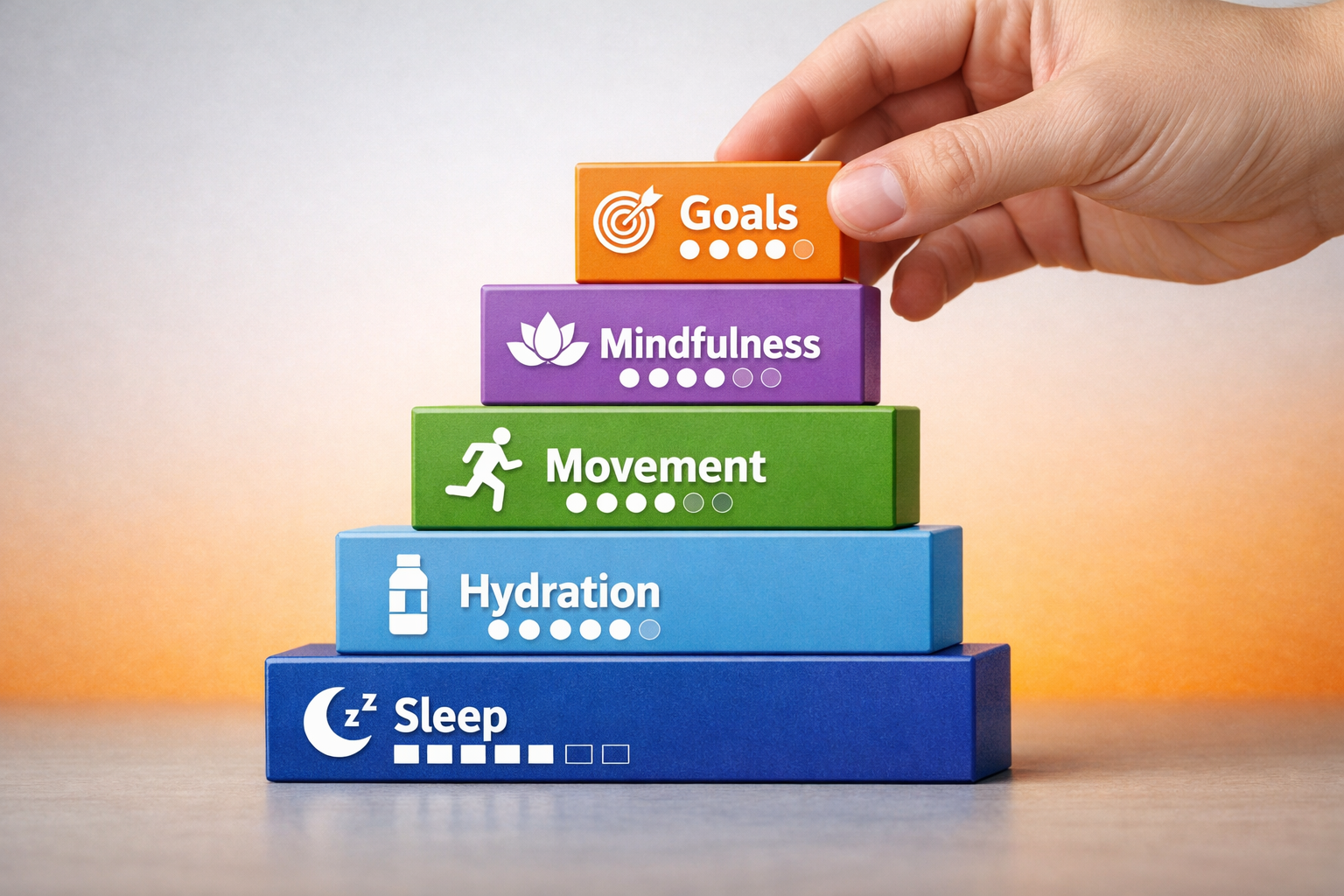
The first 30 days are the most critical — and the most fragile. Here is a realistic roadmap:
| Week | Focus | Goal |
|---|---|---|
| Week 1 | Install ONE anchor habit | Do it daily, no matter how small |
| Week 2 | Add ONE habit stack | Attach a second habit to the first |
| Week 3 | Identify friction points | Remove obstacles that block the habits |
| Week 4 | Reflect and adjust | Evaluate what is working, refine what is not |
💡 Pro Tip: Design your environment to make good habits easier and bad habits harder. Put the gym bag by the door. Remove junk food from the counter. Set phone to Do Not Disturb during focus hours.
Even with the best intentions, certain patterns sabotage recovery. Watch out for these:
The shift from “I want to change” to “This is who I am” is where lasting transformation begins.
A common question is: when is it safe to add another habit?
The answer: when the current habit feels automatic — when skipping it feels strange rather than the default. This typically happens between weeks 6 and 10 for most people.
Once that threshold is crossed, repeat the process:
Over 12 months, this approach can install 4 to 6 deeply embedded habits — enough to fundamentally transform daily life.
Getting life back on track does not require a miracle moment or a perfect Monday morning. It requires choosing one small habit, doing it today, and doing it again tomorrow.
Actionable next steps to start right now:
The path to a rebuilt life is not a sprint. It is a series of quiet, consistent choices that compound over time. Start with one. That is enough.
<code class="language-html"><!DOCTYPE html>
<html lang="en">
<head>
<meta charset="UTF-8" />
<meta name="viewport" content="width=device-width, initial-scale=1.0"/>
<title>Habit Builder Planner – Life Back on Track</title>
<style>
* { box-sizing: border-box; margin: 0; padding: 0; }
body {
font-family: 'Segoe UI', Arial, sans-serif;
background: #f4f6fb;
color: #2d3142;
padding: 16px;
}
.cg-element-wrapper {
max-width: 680px;
margin: 0 auto;
background: #fff;
border-radius: 16px;
box-shadow: 0 4px 24px rgba(44,62,80,0.10);
overflow: hidden;
}
.cg-element-header {
background: linear-gradient(135deg, #1a73e8 0%, #0d47a1 100%);
color: #fff;
padding: 28px 24px 20px;
text-align: center;
}
.cg-element-header h2 {
font-size: 1.35rem;
font-weight: 700;
margin-bottom: 6px;
}
.cg-element-header p {
font-size: 0.92rem;
opacity: 0.88;
}
.cg-element-body { padding: 24px; }
.cg-element-step {
margin-bottom: 20px;
}
.cg-element-step label {
display: block;
font-weight: 600;
font-size: 0.95rem;
margin-bottom: 6px;
color: #1a73e8;
}
.cg-element-step input[type="text"],
.cg-element-step select,
.cg-element-step textarea {
width: 100%;
padding: 10px 12px;
border: 1.5px solid #d0d7e8;
border-radius: 8px;
font-size: 0.95rem;
color: #2d3142;
background: #f8faff;
transition: border 0.2s;
resize: none;
}
.cg-element-step input[type="text"]:focus,
.cg-element-step select:focus,
.cg-element-step textarea:focus {
border-color: #1a73e8;
outline: none;
background: #fff;
}
.cg-element-step textarea { height: 72px; }
.cg-element-row {
display: flex;
gap: 12px;
flex-wrap: wrap;
}
.cg-element-row .cg-element-step { flex: 1; min-width: 160px; }
.cg-element-btn {
display: block;
width: 100%;
padding: 13px;
background: linear-gradient(135deg, #1a73e8, #0d47a1);
color: #fff;
font-size: 1rem;
font-weight: 700;
border: none;
border-radius: 10px;
cursor: pointer;
margin-top: 8px;
transition: opacity 0.2s, transform 0.1s;
}
.cg-element-btn:hover { opacity: 0.92; transform: translateY(-1px); }
.cg-element-btn:active { transform: translateY(0); }
.cg-element-result {
display: none;
margin-top: 24px;
background: #f0f6ff;
border-radius: 12px;
padding: 20px;
border-left: 4px solid #1a73e8;
}
.cg-element-result h3 {
font-size: 1.05rem;
color: #0d47a1;
margin-bottom: 14px;
font-weight: 700;
}
.cg-element-plan-item {
background: #fff;
border-radius: 8px;
padding: 12px 14px;
margin-bottom: 10px;
box-shadow: 0 1px 6px rgba(26,115,232,0.07);
}
.cg-element-plan-item .cg-element-tag {
display: inline-block;
background: #e8f0fe;
color: #1a73e8;
font-size: 0.75rem;
font-weight: 700;
border-radius: 20px;
padding: 2px 10px;
margin-bottom: 6px;
text-transform: uppercase;
letter-spacing: 0.04em;
}
.cg-element-plan-item p {
font-size: 0.92rem;
line-height: 1.55;
color: #2d3142;
}
.cg-element-plan-item strong { color: #0d47a1; }
.cg-element-tracker {
margin-top: 14px;
}
.cg-element-tracker p {
font-size: 0.88rem;
font-weight: 600;
color: #555;
margin-bottom: 8px;
}
.cg-element-days {
display: flex;
flex-wrap: wrap;
gap: 6px;
}
.cg-element-day {
width: 32px;
height: 32px;
border-radius: 6px;
background: #e8f0fe;
border: 1.5px solid #b3c8f5;
display: flex;
align-items: center;
justify-content: center;
font-size: 0.72rem;
font-weight: 700;
color: #1a73e8;
cursor: pointer;
transition: background 0.15s, color 0.15s;
user-select: none;
}
.cg-element-day.cg-done {
background: #1a73e8;
color: #fff;
border-color: #1a73e8;
}
.cg-element-reset {
display: inline-block;
margin-top: 14px;
padding: 7px 18px;
background: #fff;
border: 1.5px solid #1a73e8;
color: #1a73e8;
font-size: 0.88rem;
font-weight: 600;
border-radius: 8px;
cursor: pointer;
transition: background 0.15s;
}
.cg-element-reset:hover { background: #e8f0fe; }
.cg-element-streak {
margin-top: 10px;
font-size: 0.92rem;
font-weight: 700;
color: #0d47a1;
}
@media (max-width: 480px) {
.cg-element-header h2 { font-size: 1.1rem; }
.cg-element-day { width: 28px; height: 28px; font-size: 0.65rem; }
}
</style>
</head>
<body>
<div class="cg-element-wrapper">
<div class="cg-element-header">
<h2>🗓️ My 30-Day Habit Planner</h2>
<p>Build your personal plan to get your life back on track — one habit at a time.</p>
</div>
<div class="cg-element-body">
<div class="cg-element-step">
<label for="cg-habit-name">✏️ What is your ONE anchor habit?</label>
<input type="text" id="cg-habit-name" placeholder="e.g. Drink a glass of water every morning" maxlength="80" />
</div>
<div class="cg-element-row">
<div class="cg-element-step">
<label for="cg-life-area">🎯 Life area to improve</label>
<select id="cg-life-area">
<option value="">— Select —</option>
<option value="Health & Fitness">Health & Fitness</option>
<option value="Sleep Quality">Sleep Quality</option>
<option value="Career & Productivity">Career & Productivity</option>
<option value="Finances">Finances</option>
<option value="Relationships">Relationships</option>
<option value="Mental Health">Mental Health</option>
</select>
</div>
<div class="cg-element-step">
<label for="cg-existing-habit">🔗 Stack it after this habit</label>
<input type="text" id="cg-existing-habit" placeholder="e.g. After morning coffee" maxlength="60" />
</div>
</div>
<div class="cg-element-step">
<label for="cg-why">💡 Why does this habit matter to you?</label>
<textarea id="cg-why" placeholder="e.g. I want more energy and focus throughout the day..."></textarea>
</div>
<button class="cg-element-btn" onclick="cgGeneratePlan()">Generate My 30-Day Plan ➜</button>
<div class="cg-element-result" id="cg-result">
<h3>📋 Your Personal Habit Plan</h3>
<div class="cg-element-plan-item">
<span class="cg-element-tag">Anchor Habit</span>
<p id="cg-plan-habit"></p>
</div>
<div class="cg-element-plan-item">
<span class="cg-element-tag">Habit Stack Formula</span>
<p id="cg-plan-stack"></p>
</div>
<div class="cg-element-plan-item">
<span class="cg-element-tag">Your Why</span>
<p id="cg-plan-why"></p>
</div>
<div class="cg-element-plan-item">
<span class="cg-element-tag">30-Day Milestone</span>
<p id="cg-plan-milestone"></p>
</div>
<div class="cg-element-tracker">
<p>✅ Tap each day you complete your habit:</p>
<div class="cg-element-days" id="cg-days-grid"></div>
<div class="cg-element-streak" id="cg-streak-display"></div>
<button class="cg-element-reset" onclick="cgResetTracker()">Reset Tracker</button>
</div>
</div>
</div>
</div>
<script>
var cgDaysState = [];
function cgGeneratePlan() {
var habit = document.getElementById('cg-habit-name').value.trim();
var area = document.getElementById('cg-life-area').value;
var existing = document.getElementById('cg-existing-habit').value.trim();
var why = document.getElementById('cg-why').value.trim();
if (!habit) { alert('Please enter your anchor habit first!'); return; }
if (!area) { alert('Please select a life area to improve.'); return; }
var stackText = existing
? '"After I <strong>' + cgEscape(existing) + '</strong>, I will <strong>' + cgEscape(habit) + '</strong>."'
: '"I will <strong>' + cgEscape(habit) + '</strong> every day at a consistent time."';
var milestones = {
'Health & Fitness': 'By day 30, this movement habit will feel like a natural part of your day — your body will expect it.',
'Sleep Quality': 'By day 30, your sleep routine will be more consistent, and you will likely notice improved energy levels.',
'Career & Productivity': 'By day 30, your focus habit will be automatic — protecting your most productive hours daily.',
'Finances': 'By day 30, your financial habit will have created measurable progress toward your money goals.',
'Relationships': 'By day 30, your connection habit will have strengthened at least one important relationship.',
'Mental Health': 'By day 30, your mindfulness habit will have reduced reactive stress responses noticeably.'
};
document.getElementById('cg-plan-habit').innerHTML = '🎯 Focus area: <strong>' + cgEscape(area) + '</strong><br>Habit: <strong>' + cgEscape(habit) + '</strong>';
document.getElementById('cg-plan-stack').innerHTML = stackText;
document.getElementById('cg-plan-why').innerHTML = why ? '"' + cgEscape(why) + '"' : 'A personal reason makes habits 2x more likely to stick. Consider adding your why!';
document.getElementById('cg-plan-milestone').innerHTML = milestones[area] || 'By day 30, this habit will be deeply embedded in your daily routine.';
cgBuildDaysGrid();
var result = document.getElementById('cg-result');
result.style.display = 'block';
result.scrollIntoView({ behavior: 'smooth', block: 'start' });
}
function cgBuildDaysGrid() {
cgDaysState = new Array(30).fill(false);
var grid = document.getElementById('cg-days-grid');
grid.innerHTML = '';
for (var i = 0; i < 30; i++) {
var d = document.createElement('div');
d.className = 'cg-element-day';
d.textContent = i + 1;
d.setAttribute('data-index', i);
d.addEventListener('click', cgToggleDay);
grid.appendChild(d);
}
cgUpdateStreak();
}
function cgToggleDay(e) {
var idx = parseInt(e.target.getAttribute('data-index'));
cgDaysState[idx] = !cgDaysState[idx];
e.target.classList.toggle('cg-done', cgDaysState[idx]);
cgUpdateStreak();
}
function cgUpdateStreak() {
var count = cgDaysState.filter(Boolean).length;
var streak = 0;
for (var i = cgDaysState.length - 1; i >= 0; i--) {
if (cgDaysState[i]) streak++; else break;
}
var msg = '🏆 ' + count + '/30 days completed';
if (streak > 1) msg += ' · 🔥 ' + streak + '-day streak!';
if (count === 30) msg = '🎉 Habit fully installed! You did it — 30/30 days complete!';
document.getElementById('cg-streak-display').textContent = msg;
}
function cgResetTracker() {
if (confirm('Reset your 30-day tracker? This cannot be undone.')) {
cgBuildDaysGrid();
}
}
function cgEscape(str) {
return str.replace(/&/g,'&').replace(/</g,'<').replace(/>/g,'>').replace(/"/g,'"');
}
</script>
</body>
</html>
</code>