Physical Address
304 North Cardinal St.
Dorchester Center, MA 02124
Physical Address
304 North Cardinal St.
Dorchester Center, MA 02124
SERVERACCESS.NET
SERVERACCESS.NET
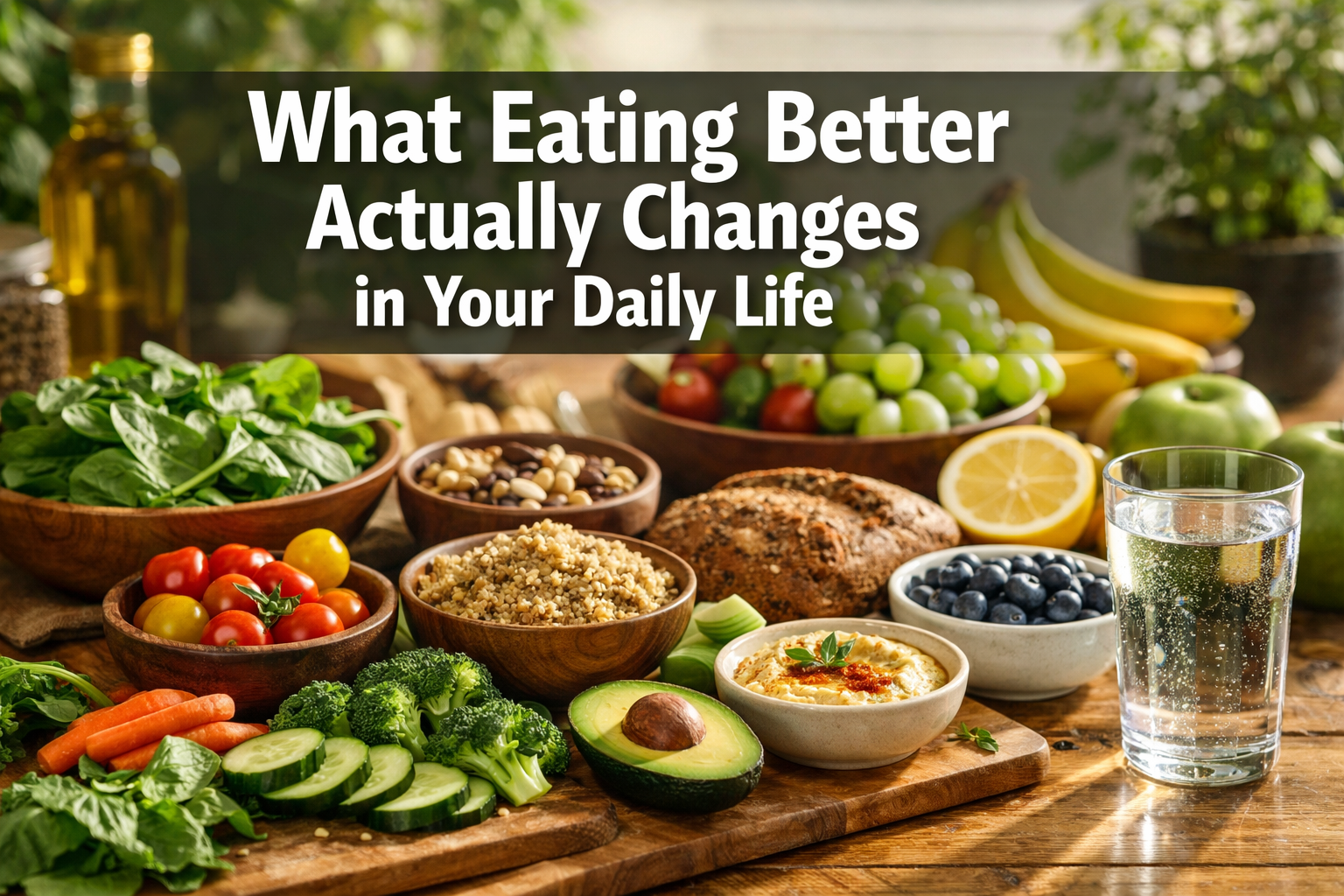
Most people know they should eat better — but few realize just how fast and how deeply better nutrition reshapes everyday experience. What eating better actually changes in your daily life goes far beyond the number on a scale. It touches your energy, your thinking, your sleep, your relationships, and even your wallet.
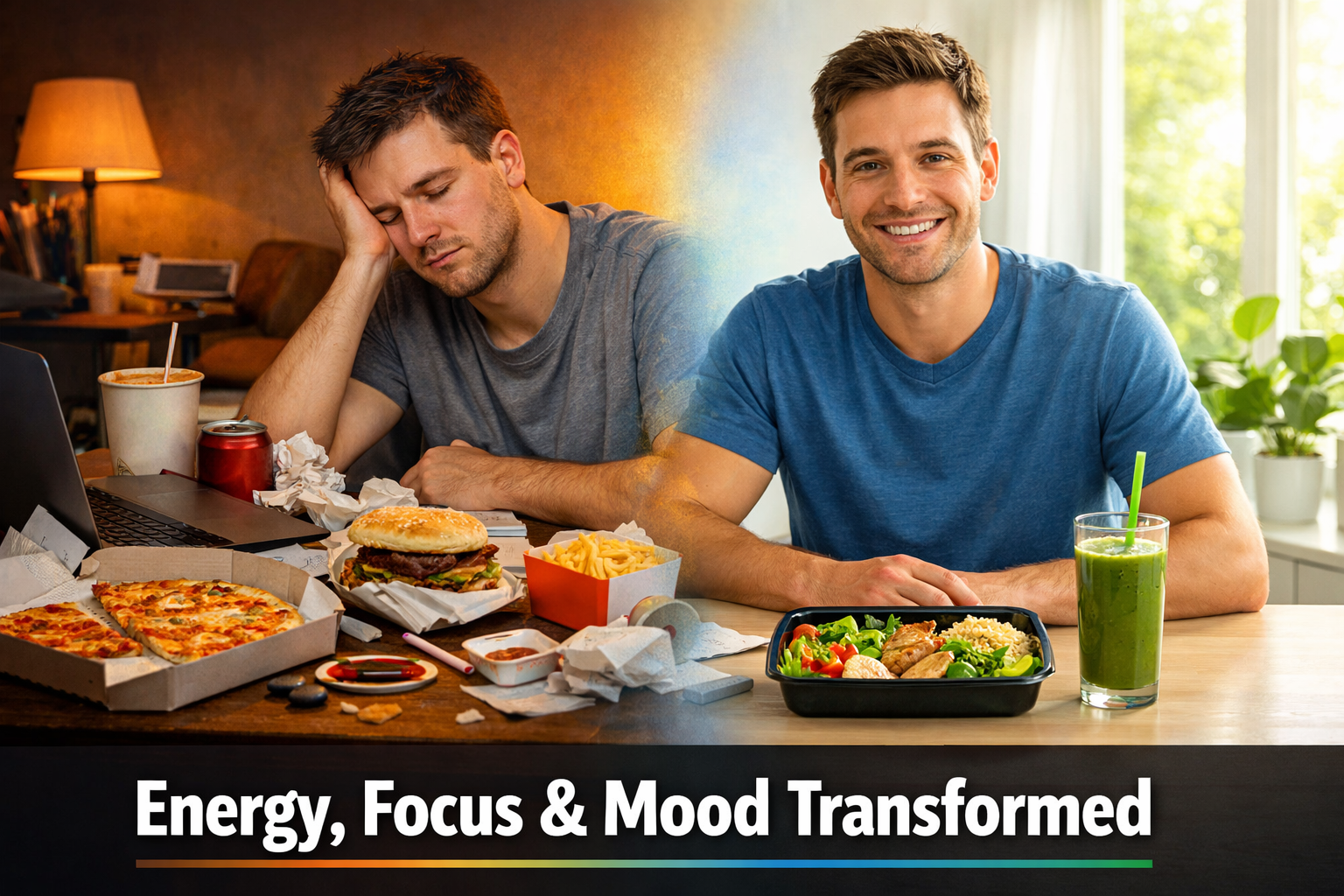
The most immediate shift people notice when they clean up their diet is a change in energy. This is not a coincidence.
Processed foods and refined sugars cause blood sugar to spike and crash. That crash is the 2 p.m. slump that millions of people fight every day with a second cup of coffee. When whole foods — vegetables, lean proteins, healthy fats, and complex carbohydrates — replace processed options, blood sugar stays steadier throughout the day.
“Stable blood sugar means stable energy. It really is that simple.”
| Change | Typical Timeline |
|---|---|
| Reduced afternoon energy crashes | 3–7 days |
| Improved morning alertness | 1–2 weeks |
| Less reliance on caffeine | 2–4 weeks |
| Noticeable physical stamina boost | 3–6 weeks |
Even modest improvements — like swapping white bread for whole grain or adding a daily serving of leafy greens — can produce measurable differences in daily energy within a week or two, according to research published in Nutrients (Melo et al., 2019).
Here is where many people are genuinely surprised. What eating better actually changes in your daily life includes how you think and how you feel emotionally.
The gut produces roughly 90% of the body’s serotonin — the neurotransmitter most associated with mood and emotional balance. Feed the gut poorly, and serotonin production suffers. Feed it well — with fiber, fermented foods, and diverse plant-based nutrients — and the mood benefits can be significant.
Studies published in The Lancet Psychiatry (Jacka et al., 2017) found that a diet improvement intervention reduced symptoms of depression in adults with major depressive disorder. This was not a minor finding. It suggested that food is a genuine mental health tool.
Better nutrition also sharpens focus and memory. Key nutrients linked to cognitive function include:
When these nutrients are consistently present in the diet, the difference in daily mental performance can be striking — sharper focus at work, quicker recall, and less mental fog.
Sleep is often the unsung hero of better eating. Many people do not connect what they eat with how well they sleep, but the relationship is direct.
High sugar intake disrupts sleep architecture — meaning the brain spends less time in deep, restorative sleep stages. Alcohol and heavy processed meals close to bedtime elevate cortisol and disrupt the body’s natural wind-down process.
On the flip side, foods rich in magnesium (like almonds, spinach, and black beans), tryptophan (like turkey and pumpkin seeds), and complex carbohydrates support the production of melatonin and help the body relax into sleep naturally.
Chronic stress depletes key nutrients — especially vitamin C, magnesium, and B vitamins. When the diet consistently replenishes these, the body’s stress response becomes more resilient. People report feeling less reactive, more patient, and better able to handle daily pressure.
This is not just about athletic performance. It is about the quality of ordinary physical tasks.
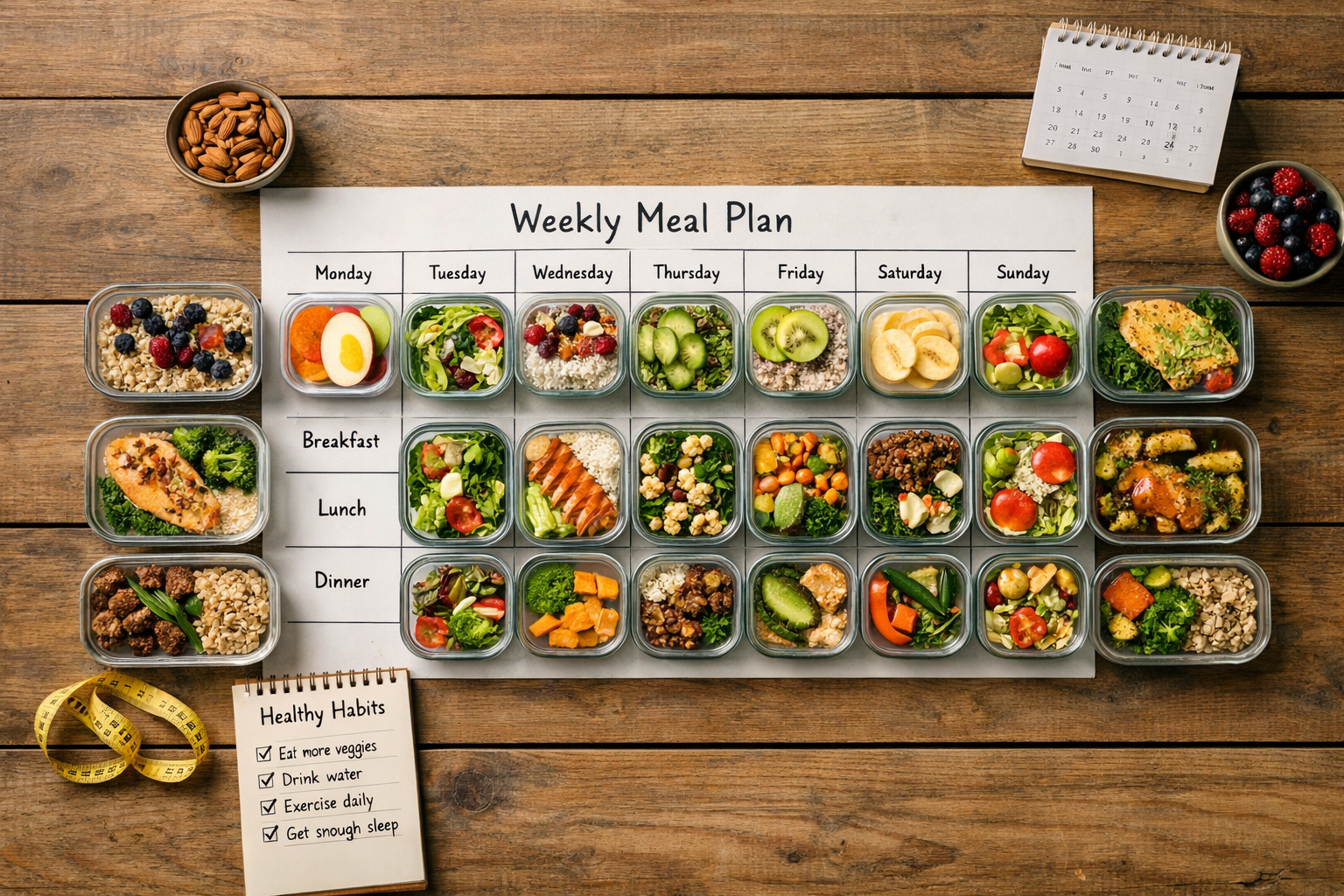
When the body gets proper nutrition, several physical realities shift:
A 2020 review in Frontiers in Nutrition (Christ & Latz, 2019) confirmed that diet-driven inflammation is a root driver of many chronic physical complaints — and that dietary change can reduce that inflammation meaningfully.
Eating better is sometimes dismissed as expensive or socially inconvenient. The reality is more nuanced.
| Food Approach | Average Weekly Cost (per person) | Long-Term Health Cost |
|---|---|---|
| Heavily processed diet | Lower upfront (~$60–80) | Higher (chronic disease risk) |
| Balanced whole-food diet | Moderate (~$80–110) | Lower (reduced medical costs) |
| Meal-prepped home cooking | Most cost-effective long-term | Significantly lower |
The Harvard T.H. Chan School of Public Health has estimated that eating a healthy diet costs roughly $1.50 more per day than an unhealthy one — a small investment relative to the downstream healthcare savings (Rao et al., 2013).
Better eating does not mean social isolation. It means making smarter choices within social settings — ordering grilled instead of fried, adding a salad, or simply eating a smaller portion of a less healthy option. Flexibility and consistency matter more than perfection.
Change does not happen overnight, but it happens faster than most people expect.
What eating better actually changes in your daily life is not abstract or distant — it is immediate, tangible, and personal. Energy, mood, sleep, focus, physical comfort, and long-term health all respond to nutritional improvement.
Actionable next steps to start today:
No dramatic overhaul is required. Consistent, small improvements compound into life-changing results. The body responds — and daily life reflects that response in ways that are hard to ignore.
<code class="language-html"><!DOCTYPE html>
<html lang="en">
<head>
  <meta charset="UTF-8" />
  <meta name="viewport" content="width=device-width, initial-scale=1.0"/>
  <title>Daily Life Change Tracker – Eating Better Quiz</title>
  <style>
    *, *::before, *::after { box-sizing: border-box; margin: 0; padding: 0; }

    body {
      font-family: 'Segoe UI', Arial, sans-serif;
      background: #f4f9f4;
      display: flex;
      justify-content: center;
      align-items: flex-start;
      min-height: 100vh;
      padding: 24px 16px;
    }

    .cg-element-wrapper {
      background: #ffffff;
      border-radius: 16px;
      box-shadow: 0 4px 24px rgba(0,0,0,0.10);
      max-width: 680px;
      width: 100%;
      overflow: hidden;
    }

    .cg-element-header {
      background: linear-gradient(135deg, #2d6a4f, #52b788);
      color: #fff;
      padding: 28px 28px 20px;
      text-align: center;
    }

    .cg-element-header h2 {
      font-size: 1.45rem;
      font-weight: 700;
      margin-bottom: 6px;
      line-height: 1.3;
    }

    .cg-element-header p {
      font-size: 0.95rem;
      opacity: 0.9;
    }

    .cg-element-body {
      padding: 28px;
    }

    .cg-element-progress-bar-wrap {
      background: #e8f5e9;
      border-radius: 8px;
      height: 10px;
      margin-bottom: 22px;
      overflow: hidden;
    }

    .cg-element-progress-bar {
      height: 100%;
      background: linear-gradient(90deg, #2d6a4f, #74c69d);
      border-radius: 8px;
      transition: width 0.4s ease;
      width: 0%;
    }

    .cg-element-progress-label {
      font-size: 0.82rem;
      color: #555;
      margin-bottom: 6px;
      text-align: right;
    }

    .cg-element-question-block {
      display: none;
    }

    .cg-element-question-block.cg-active {
      display: block;
    }

    .cg-element-question-text {
      font-size: 1.08rem;
      font-weight: 600;
      color: #1b4332;
      margin-bottom: 18px;
      line-height: 1.5;
    }

    .cg-element-option {
      display: flex;
      align-items: center;
      gap: 12px;
      padding: 13px 16px;
      border: 2px solid #d8f3dc;
      border-radius: 10px;
      margin-bottom: 10px;
      cursor: pointer;
      transition: background 0.2s, border-color 0.2s;
      background: #f8fdf8;
    }

    .cg-element-option:hover {
      background: #d8f3dc;
      border-color: #52b788;
    }

    .cg-element-option input[type="radio"] {
      accent-color: #2d6a4f;
      width: 18px;
      height: 18px;
      flex-shrink: 0;
    }

    .cg-element-option label {
      font-size: 0.97rem;
      color: #2d3a2e;
      cursor: pointer;
      line-height: 1.4;
    }

    .cg-element-option.cg-selected {
      background: #d8f3dc;
      border-color: #2d6a4f;
    }

    .cg-element-nav {
      display: flex;
      justify-content: space-between;
      align-items: center;
      margin-top: 24px;
      gap: 12px;
    }

    .cg-element-btn {
      padding: 11px 26px;
      border: none;
      border-radius: 8px;
      font-size: 0.97rem;
      font-weight: 600;
      cursor: pointer;
      transition: background 0.2s, transform 0.1s;
    }

    .cg-element-btn:active { transform: scale(0.97); }

    .cg-element-btn-primary {
      background: #2d6a4f;
      color: #fff;
    }

    .cg-element-btn-primary:hover { background: #1b4332; }

    .cg-element-btn-secondary {
      background: #e8f5e9;
      color: #2d6a4f;
    }

    .cg-element-btn-secondary:hover { background: #d8f3dc; }

    .cg-element-btn:disabled {
      opacity: 0.4;
      cursor: not-allowed;
    }

    .cg-element-result {
      display: none;
      text-align: center;
      padding: 10px 0 6px;
    }

    .cg-element-result.cg-active { display: block; }

    .cg-element-result-icon {
      font-size: 3rem;
      margin-bottom: 10px;
    }

    .cg-element-result-title {
      font-size: 1.35rem;
      font-weight: 700;
      color: #1b4332;
      margin-bottom: 8px;
    }

    .cg-element-result-subtitle {
      font-size: 1rem;
      color: #40916c;
      font-weight: 600;
      margin-bottom: 14px;
    }

    .cg-element-result-desc {
      font-size: 0.95rem;
      color: #444;
      line-height: 1.6;
      margin-bottom: 20px;
      text-align: left;
      background: #f0faf4;
      border-left: 4px solid #52b788;
      padding: 14px 16px;
      border-radius: 8px;
    }

    .cg-element-result-tips {
      text-align: left;
      margin-bottom: 20px;
    }

    .cg-element-result-tips h4 {
      font-size: 0.97rem;
      font-weight: 700;
      color: #2d6a4f;
      margin-bottom: 10px;
    }

    .cg-element-result-tips ul {
      list-style: none;
      padding: 0;
    }

    .cg-element-result-tips li {
      font-size: 0.93rem;
      color: #333;
      padding: 6px 0 6px 26px;
      position: relative;
      border-bottom: 1px solid #e8f5e9;
    }

    .cg-element-result-tips li::before {
      content: "✅";
      position: absolute;
      left: 0;
    }

    .cg-element-score-badge {
      display: inline-block;
      background: linear-gradient(135deg, #2d6a4f, #52b788);
      color: #fff;
      font-size: 1.6rem;
      font-weight: 800;
      padding: 10px 28px;
      border-radius: 50px;
      margin-bottom: 16px;
    }

    .cg-element-restart-btn {
      background: #f0faf4;
      color: #2d6a4f;
      border: 2px solid #52b788;
      padding: 10px 24px;
      border-radius: 8px;
      font-size: 0.95rem;
      font-weight: 600;
      cursor: pointer;
      transition: background 0.2s;
    }

    .cg-element-restart-btn:hover { background: #d8f3dc; }

    @media (max-width: 480px) {
      .cg-element-body { padding: 18px 14px; }
      .cg-element-header { padding: 20px 16px 16px; }
      .cg-element-header h2 { font-size: 1.15rem; }
      .cg-element-btn { padding: 10px 16px; font-size: 0.9rem; }
    }
  </style>
</head>
<body>
  <div class="cg-element-wrapper">
    <div class="cg-element-header">
      <h2>🥗 How Ready Are You to Eat Better?</h2>
      <p>Answer 6 quick questions to discover where you are — and what to change first.</p>
    </div>
    <div class="cg-element-body">
      <div class="cg-element-progress-label" id="cg-progress-label">Question 1 of 6</div>
      <div class="cg-element-progress-bar-wrap">
        <div class="cg-element-progress-bar" id="cg-progress-bar"></div>
      </div>

      <!-- Question 1 -->
      <div class="cg-element-question-block cg-active" data-q="0">
        <div class="cg-element-question-text">How would you describe your typical daily energy level?</div>
        <div class="cg-element-option" onclick="cg_selectOption(this, 0, 0)">
          <input type="radio" name="q0" id="q0o0"><label for="q0o0">I crash hard in the afternoon every day</label>
        </div>
        <div class="cg-element-option" onclick="cg_selectOption(this, 0, 1)">
          <input type="radio" name="q0" id="q0o1"><label for="q0o1">My energy is inconsistent — good some days, bad others</label>
        </div>
        <div class="cg-element-option" onclick="cg_selectOption(this, 0, 2)">
          <input type="radio" name="q0" id="q0o2"><label for="q0o2">Mostly steady, with occasional dips</label>
        </div>
        <div class="cg-element-option" onclick="cg_selectOption(this, 0, 3)">
          <input type="radio" name="q0" id="q0o3"><label for="q0o3">Consistently strong energy throughout the day</label>
        </div>
      </div>

      <!-- Question 2 -->
      <div class="cg-element-question-block" data-q="1">
        <div class="cg-element-question-text">How many servings of vegetables and fruit do you eat daily?</div>
        <div class="cg-element-option" onclick="cg_selectOption(this, 1, 0)">
          <input type="radio" name="q1" id="q1o0"><label for="q1o0">0–1 servings — it's rare</label>
        </div>
        <div class="cg-element-option" onclick="cg_selectOption(this, 1, 1)">
          <input type="radio" name="q1" id="q1o1"><label for="q1o1">2–3 servings most days</label>
        </div>
        <div class="cg-element-option" onclick="cg_selectOption(this, 1, 2)">
          <input type="radio" name="q1" id="q1o2"><label for="q1o2">4–5 servings regularly</label>
        </div>
        <div class="cg-element-option" onclick="cg_selectOption(this, 1, 3)">
          <input type="radio" name="q1" id="q1o3"><label for="q1o3">5+ servings — it's a daily habit</label>
        </div>
      </div>

      <!-- Question 3 -->
      <div class="cg-element-question-block" data-q="2">
        <div class="cg-element-question-text">How often do you eat processed or fast food?</div>
        <div class="cg-element-option" onclick="cg_selectOption(this, 2, 0)">
          <input type="radio" name="q2" id="q2o0"><label for="q2o0">Almost every day</label>
        </div>
        <div class="cg-element-option" onclick="cg_selectOption(this, 2, 1)">
          <input type="radio" name="q2" id="q2o1"><label for="q2o1">3–4 times a week</label>
        </div>
        <div class="cg-element-option" onclick="cg_selectOption(this, 2, 2)">
          <input type="radio" name="q2" id="q2o2"><label for="q2o2">Once or twice a week</label>
        </div>
        <div class="cg-element-option" onclick="cg_selectOption(this, 2, 3)">
          <input type="radio" name="q2" id="q2o3"><label for="q2o3">Rarely or never</label>
        </div>
      </div>

      <!-- Question 4 -->
      <div class="cg-element-question-block" data-q="3">
        <div class="cg-element-question-text">How would you rate your sleep quality most nights?</div>
        <div class="cg-element-option" onclick="cg_selectOption(this, 3, 0)">
          <input type="radio" name="q3" id="q3o0"><label for="q3o0">Poor — I wake up tired most mornings</label>
        </div>
        <div class="cg-element-option" onclick="cg_selectOption(this, 3, 1)">
          <input type="radio" name="q3" id="q3o1"><label for="q3o1">Fair — some nights are okay, some are rough</label>
        </div>
        <div class="cg-element-option" onclick="cg_selectOption(this, 3, 2)">
          <input type="radio" name="q3" id="q3o2"><label for="q3o2">Good — I usually feel rested</label>
        </div>
        <div class="cg-element-option" onclick="cg_selectOption(this, 3, 3)">
          <input type="radio" name="q3" id="q3o3"><label for="q3o3">Excellent — deep, consistent sleep</label>
        </div>
      </div>

      <!-- Question 5 -->
      <div class="cg-element-question-block" data-q="4">
        <div class="cg-element-question-text">How would you describe your mental focus during the workday?</div>
        <div class="cg-element-option" onclick="cg_selectOption(this, 4, 0)">
          <input type="radio" name="q4" id="q4o0"><label for="q4o0">Foggy and scattered most of the time</label>
        </div>
        <div class="cg-element-option" onclick="cg_selectOption(this, 4, 1)">
          <input type="radio" name="q4" id="q4o1"><label for="q4o1">Okay but I struggle to stay on task</label>
        </div>
        <div class="cg-element-option" onclick="cg_selectOption(this, 4, 2)">
          <input type="radio" name="q4" id="q4o2"><label for="q4o2">Fairly focused with some off moments</label>
        </div>
        <div class="cg-element-option" onclick="cg_selectOption(this, 4, 3)">
          <input type="radio" name="q4" id="q4o3"><label for="q4o3">Sharp and clear for most of the day</label>
        </div>
      </div>

      <!-- Question 6 -->
      <div class="cg-element-question-block" data-q="5">
        <div class="cg-element-question-text">How often do you plan or prepare meals at home?</div>
        <div class="cg-element-option" onclick="cg_selectOption(this, 5, 0)">
          <input type="radio" name="q5" id="q5o0"><label for="q5o0">Almost never — I mostly order or grab food</label>
        </div>
        <div class="cg-element-option" onclick="cg_selectOption(this, 5, 1)">
          <input type="radio" name="q5" id="q5o1"><label for="q5o1">Occasionally — a few times a month</label>
        </div>
        <div class="cg-element-option" onclick="cg_selectOption(this, 5, 2)">
          <input type="radio" name="q5" id="q5o2"><label for="q5o2">Regularly — several times a week</label>
        </div>
        <div class="cg-element-option" onclick="cg_selectOption(this, 5, 3)">
          <input type="radio" name="q5" id="q5o3"><label for="q5o3">Most days — meal prep is part of my routine</label>
        </div>
      </div>

      <!-- Result -->
      <div class="cg-element-result" id="cg-result">
        <div class="cg-element-result-icon" id="cg-result-icon"></div>
        <div class="cg-element-score-badge" id="cg-score-badge"></div>
        <div class="cg-element-result-title" id="cg-result-title"></div>
        <div class="cg-element-result-subtitle" id="cg-result-subtitle"></div>
        <div class="cg-element-result-desc" id="cg-result-desc"></div>
        <div class="cg-element-result-tips">
          <h4>Your Top 3 Next Steps:</h4>
          <ul id="cg-result-tips-list"></ul>
        </div>
        <button class="cg-element-restart-btn" onclick="cg_restart()">🔄 Retake the Quiz</button>
      </div>

      <!-- Navigation -->
      <div class="cg-element-nav" id="cg-nav">
        <button class="cg-element-btn cg-element-btn-secondary" id="cg-btn-back" onclick="cg_navigate(-1)" disabled>← Back</button>
        <button class="cg-element-btn cg-element-btn-primary" id="cg-btn-next" onclick="cg_navigate(1)">Next →</button>
      </div>
    </div>
  </div>

  <script>
    var cg_current = 0;
    var cg_answers = [null, null, null, null, null, null];
    var cg_total = 6;

    var cg_results = [
      {
        min: 0, max: 5,
        icon: "🌱",
        title: "Starting Line",
        subtitle: "Big changes are possible — and closer than you think.",
        desc: "Your current habits suggest there is significant room to improve daily energy, mood, sleep, and focus through better nutrition. The good news: even small, consistent changes produce noticeable results within 1–2 weeks. You do not need a perfect diet — just a better one.",
        tips: [
          "Start by swapping one processed snack for a piece of fruit or a handful of nuts each day",
          "Add one vegetable to your largest meal — even frozen veggies count",
          "Drink one extra glass of water before each meal to reduce cravings"
        ]
      },
      {
        min: 6, max: 10,
        icon: "🔄",
        title: "Building Momentum",
        subtitle: "You have a foundation — now it's time to build on it.",
        desc: "You are making some healthy choices, but inconsistency is likely holding you back from the full benefits of better nutrition. Steadying your habits — especially around vegetables, processed food, and meal prep — will unlock noticeably better energy and mental clarity.",
        tips: [
          "Plan two home-cooked meals per week in advance to reduce reliance on fast food",
          "Aim for 4–5 servings of vegetables and fruit daily — add one more serving than your current habit",
          "Reduce processed food to once a week and notice the difference in your afternoon energy"
        ]
      },
      {
        min: 11, max: 15,
        icon: "⚡",
        title: "Strong Foundation",
        subtitle: "You are already experiencing many of the daily life benefits of eating well.",
        desc: "Your eating habits are solid and your daily life likely reflects that — better energy, sharper focus, and more stable mood. The next level is fine-tuning: reducing inflammatory foods further, optimizing sleep-supporting nutrients, and maintaining consistency over the long term.",
        tips: [
          "Add omega-3 rich foods (salmon, walnuts, flaxseed) 3x per week for brain and joint support",
          "Experiment with magnesium-rich foods before bed (almonds, spinach) to deepen sleep quality",
          "Focus on meal variety — diverse plant foods feed a stronger gut microbiome"
        ]
      },
      {
        min: 16, max: 18,
        icon: "🏆",
        title: "Nutrition Champion",
        subtitle: "Your daily habits are working hard for you — keep it up.",
        desc: "Excellent work. Your diet is likely delivering consistent energy, strong mental clarity, good sleep, and resilient physical health. At this level, the focus shifts to long-term disease prevention, gut microbiome diversity, and helping others around you benefit from what you have learned.",
        tips: [
          "Diversify your plant foods — aim for 30 different plant varieties per week for microbiome health",
          "Consider tracking your nutrient intake periodically to catch any gaps (iron, vitamin D, B12)",
          "Share your habits — cooking for others or sharing meal ideas compounds the benefits beyond yourself"
        ]
      }
    ];

    function cg_selectOption(el, qIndex, optIndex) {
      var block = document.querySelectorAll('.cg-element-question-block')[qIndex];
      var options = block.querySelectorAll('.cg-element-option');
      options.forEach(function(o) { o.classList.remove('cg-selected'); });
      el.classList.add('cg-selected');
      el.querySelector('input[type="radio"]').checked = true;
      cg_answers[qIndex] = optIndex;
      document.getElementById('cg-btn-next').disabled = false;
    }

    function cg_navigate(dir) {
      if (dir === 1 && cg_answers[cg_current] === null) return;
      var blocks = document.querySelectorAll('.cg-element-question-block');
      blocks[cg_current].classList.remove('cg-active');
      cg_current += dir;

      if (cg_current >= cg_total) {
        cg_showResult();
        return;
      }

      blocks[cg_current].classList.add('cg-active');
      cg_updateProgress();

      document.getElementById('cg-btn-back').disabled = (cg_current === 0);
      document.getElementById('cg-btn-next').disabled = (cg_answers[cg_current] === null);
      document.getElementById('cg-btn-next').textContent = (cg_current === cg_total - 1) ? 'See My Results 🎯' : 'Next →';
    }

    function cg_updateProgress() {
      var pct = Math.round((cg_current / cg_total) * 100);
      document.getElementById('cg-progress-bar').style.width = pct + '%';
      document.getElementById('cg-progress-label').textContent = 'Question ' + (cg_current + 1) + ' of ' + cg_total;
    }

    function cg_showResult() {
      var total = 0;
      cg_answers.forEach(function(a) { if (a !== null) total += a; });

      var result = cg_results[0];
      for (var i = 0; i < cg_results.length; i++) {
        if (total >= cg_results[i].min && total <= cg_results[i].max) {
          result = cg_results[i];
          break;
        }
      }

      document.getElementById('cg-result-icon').textContent = result.icon;
      document.getElementById('cg-score-badge').textContent = total + ' / 18';
      document.getElementById('cg-result-title').textContent = result.title;
      document.getElementById('cg-result-subtitle').textContent = result.subtitle;
      document.getElementById('cg-result-desc').textContent = result.desc;

      var tipsList = document.getElementById('cg-result-tips-list');
      tipsList.innerHTML = '';
      result.tips.forEach(function(tip) {
        var li = document.createElement('li');
        li.textContent = tip;
        tipsList.appendChild(li);
      });

      document.querySelectorAll('.cg-element-question-block').forEach(function(b) {
        b.classList.remove('cg-active');
      });
      document.getElementById('cg-nav').style.display = 'none';
      document.getElementById('cg-progress-label').textContent = 'Quiz Complete!';
      document.getElementById('cg-progress-bar').style.width = '100%';
      document.getElementById('cg-result').classList.add('cg-active');
    }

    function cg_restart() {
      cg_current = 0;
      cg_answers = [null, null, null, null, null, null];
      document.querySelectorAll('.cg-element-question-block').forEach(function(b, i) {
        b.classList.remove('cg-active');
        b.querySelectorAll('.cg-element-option').forEach(function(o) {
          o.classList.remove('cg-selected');
          o.querySelector('input[type="radio"]').checked = false;
        });
      });
      document.querySelectorAll('.cg-element-question-block')[0].classList.add('cg-active');
      document.getElementById('cg-result').classList.remove('cg-active');
      document.getElementById('cg-nav').style.display = 'flex';
      document.getElementById('cg-btn-back').disabled = true;
      document.getElementById('cg-btn-next').disabled = true;
      document.getElementById('cg-btn-next').textContent = 'Next →';
      document.getElementById('cg-progress-bar').style.width = '0%';
      document.getElementById('cg-progress-label').textContent = 'Question 1 of 6';
    }

    // Init
    document.getElementById('cg-btn-next').disabled = true;
  </script>
</body>
</html>
</code>