Physical Address
304 North Cardinal St.
Dorchester Center, MA 02124
Physical Address
304 North Cardinal St.
Dorchester Center, MA 02124
SERVERACCESS.NET
SERVERACCESS.NET
Imagine rushing through a Monday morning — coffee in one hand, phone in the other, mentally rehearsing a to-do list that never seems to shrink. Sound familiar? Millions of people live this way every single day. But a growing body of research suggests that a simple, ancient practice might hold the key to calming the chaos. So, can mindfulness make everyday life easier? The short answer is yes — and the science backs it up.
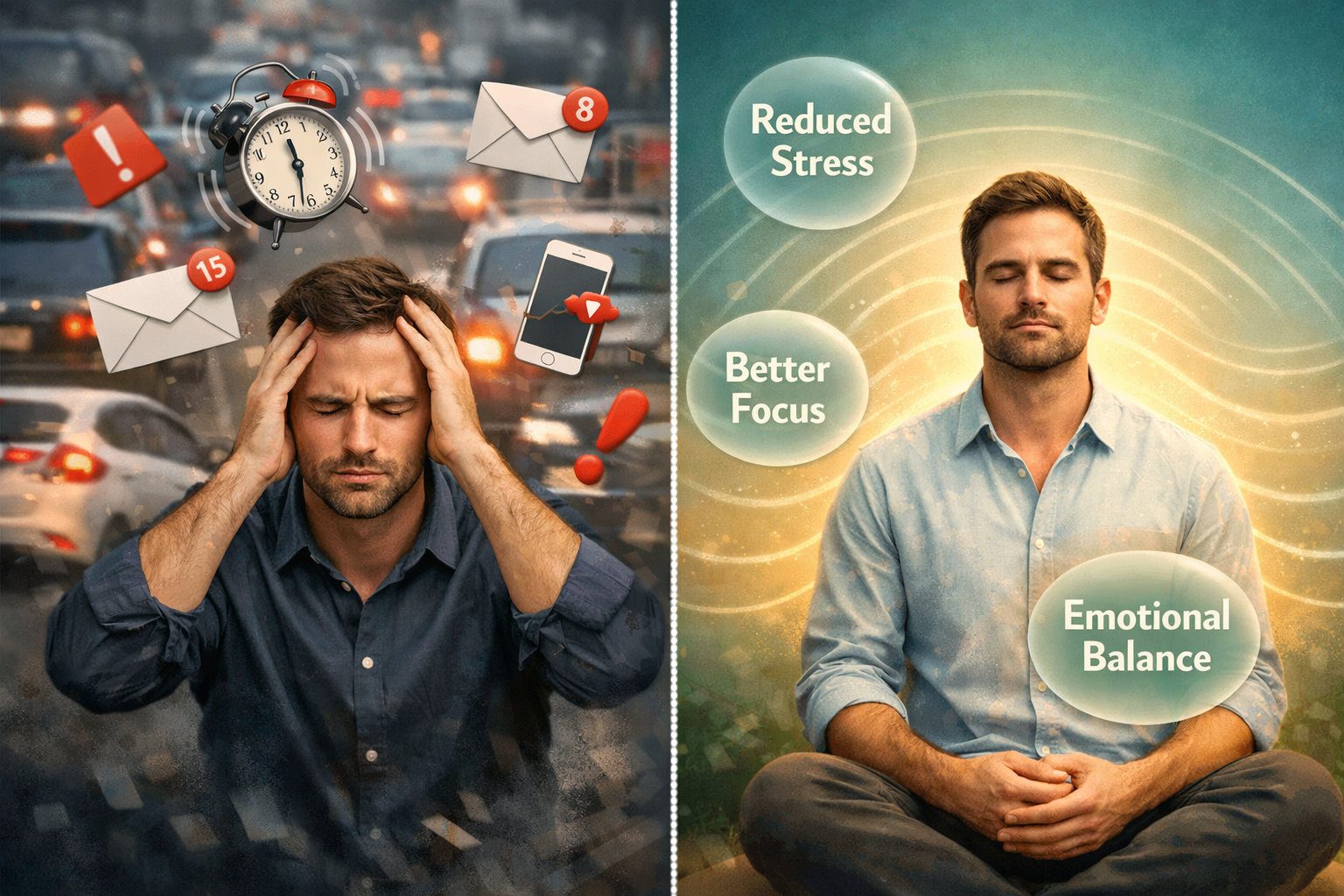
Before exploring whether mindfulness can make everyday life easier, it helps to understand what the term actually means.
Mindfulness is the practice of paying full, non-judgmental attention to the present moment. It means noticing thoughts, feelings, and physical sensations without immediately reacting to them.
Rooted in Buddhist tradition, mindfulness was adapted for Western medicine in the late 1970s by Dr. Jon Kabat-Zinn, who developed Mindfulness-Based Stress Reduction (MBSR) at the University of Massachusetts. Since then, it has been studied extensively in clinical settings worldwide.
💬 “Mindfulness means paying attention in a particular way: on purpose, in the present moment, and non-judgmentally.” — Jon Kabat-Zinn
It is not about:
It is about:
The evidence is compelling. Dozens of peer-reviewed studies show that consistent mindfulness practice leads to real, measurable changes in how people think, feel, and behave.
A landmark meta-analysis published in JAMA Internal Medicine found that mindfulness meditation programs showed moderate evidence of improving anxiety, depression, and pain. Participants in MBSR programs reported significantly lower perceived stress after just eight weeks.
A 2015 study published in JAMA Internal Medicine found that older adults who practiced mindfulness meditation experienced less insomnia, fatigue, and depression compared to those who received sleep hygiene education alone.
Research from Harvard University found that the human mind wanders nearly 47% of the time — and that mind-wandering is a direct cause of unhappiness. Mindfulness training has been shown to reduce this mental drift and improve sustained attention.
Studies show that mindfulness strengthens the prefrontal cortex — the part of the brain responsible for decision-making and emotional control — while reducing activity in the amygdala, the brain’s fear and stress center.
| Benefit | Evidence Level | Time to Notice Results |
|---|---|---|
| Stress reduction | Strong | 4–8 weeks |
| Improved focus | Moderate–Strong | 2–4 weeks |
| Better sleep | Moderate | 4–6 weeks |
| Reduced anxiety | Strong | 6–8 weeks |
| Emotional balance | Moderate | 4–8 weeks |
One of the most common objections is: “I don’t have time for this.” But mindfulness doesn’t require a retreat or an hour of silence. It can be integrated into the moments already present in daily life.
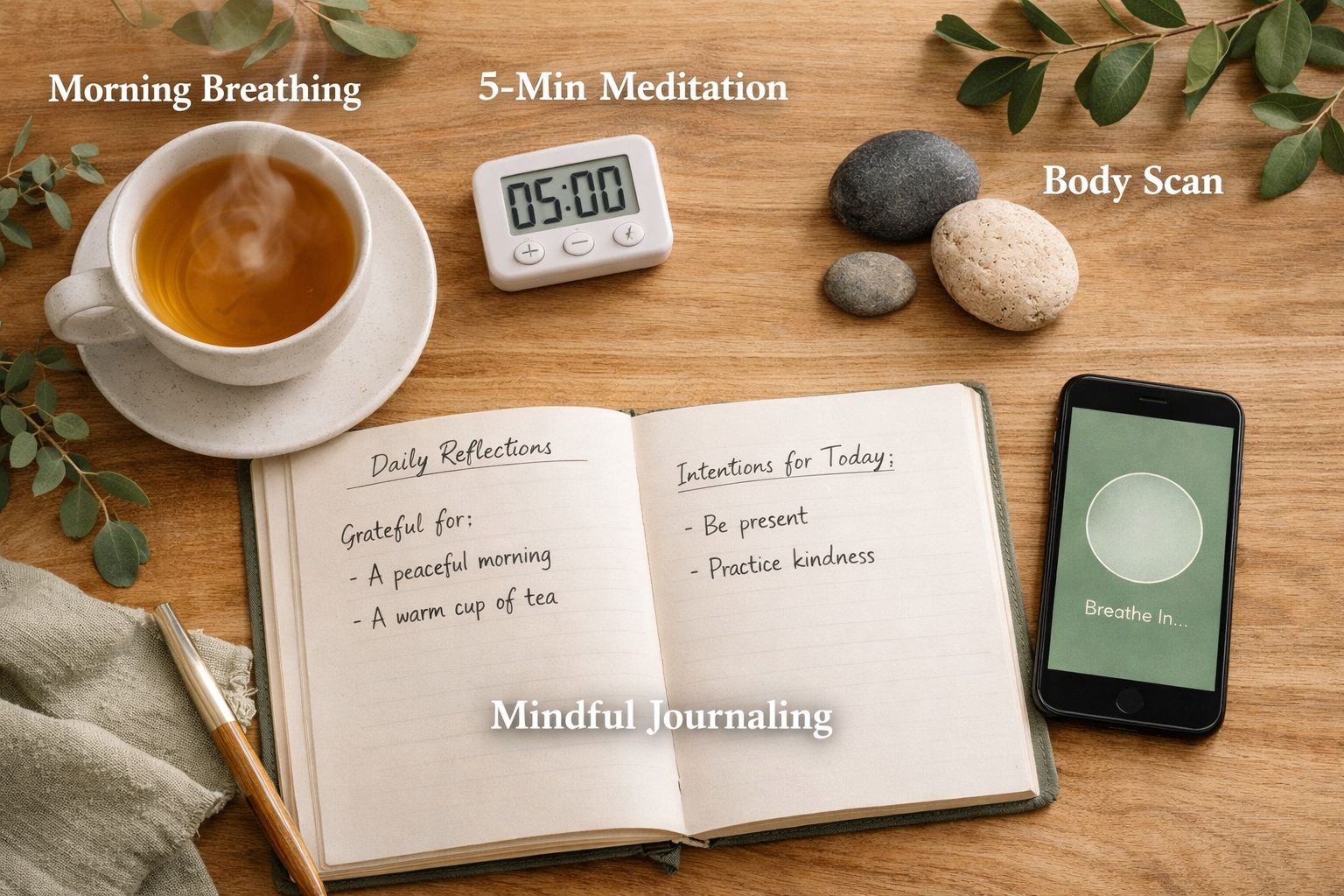
Here are practical ways to bring mindfulness into an ordinary day:
1. Mindful Morning Routine Instead of reaching for the phone immediately, spend the first two minutes of the day focusing on breath. Notice the sensation of inhaling and exhaling. That’s it.
2. Mindful Eating Eat one meal a day without screens. Notice the taste, texture, and smell of food. This simple act reduces overeating and increases meal satisfaction.
3. The 3-Breath Reset Before any stressful meeting or difficult conversation, take three slow, deep breaths. This activates the parasympathetic nervous system, signaling the body to calm down.
4. Mindful Walking During a commute or lunch break, focus on the physical sensation of each step. Notice sounds, sights, and smells without judgment.
5. Body Scan Before Bed Spend five minutes lying down and mentally scanning from head to toe, noticing areas of tension without trying to fix them.
💡 Pro Tip: Linking a mindfulness habit to an existing routine (like morning coffee or brushing teeth) dramatically increases the chance of sticking with it.
Even knowing that mindfulness works, many people struggle to maintain the practice. Here’s a look at the most common obstacles:
| Barrier | Why It Happens | Simple Fix |
|---|---|---|
| “My mind won’t stop” | Misunderstanding the goal | Noticing thoughts IS the practice |
| “I don’t have time” | Overcomplicating it | Start with 3–5 minutes daily |
| “I feel silly” | Social stigma | Practice privately at home |
| “I forget to do it” | Lack of habit cues | Tie it to an existing routine |
| “I don’t see results” | Expecting quick fixes | Track mood/stress weekly |
The biggest myth is that a “wandering mind” means failure. In reality, noticing that the mind has wandered — and gently returning focus — is the core skill being trained.
For those dealing with anxiety, low mood, or chronic stress, mindfulness offers a clinically validated tool — not a replacement for professional care, but a powerful complement to it.
Mindfulness-Based Cognitive Therapy (MBCT) has been endorsed by the UK’s National Institute for Health and Care Excellence (NICE) as an effective treatment for recurrent depression. Studies show it can reduce relapse rates by up to 50% in people who have experienced three or more depressive episodes.
For everyday worry and anxiety — the kind most people experience — mindfulness teaches a critical skill: the ability to observe anxious thoughts without being consumed by them. Rather than fighting the thought (“Stop worrying!”), mindfulness encourages acknowledgment (“I notice I’m feeling anxious right now”) — which paradoxically reduces its power.
Starting a mindfulness practice doesn’t require an app subscription or a yoga mat. Here’s a simple four-week starter plan:
By the end of four weeks, most people report noticeable differences in how they respond to stress — not because life gets easier, but because their relationship with difficulty changes.
Use the interactive quiz below to discover which mindfulness practices are the best fit for your lifestyle and stress level.
Mindfulness Readiness Quiz
🧘 Mindfulness Readiness Quiz
Find out which mindfulness practice fits your lifestyle best — takes under 2 minutes!
Question 1 of 5
How would you describe your current stress level on most days?
Question 2 of 5
How much time can you realistically dedicate to a new daily habit?
Question 3 of 5
Which challenge affects you most in daily life?
Question 4 of 5
Have you tried any mindfulness or meditation practice before?
Question 5 of 5
What setting feels most comfortable for you to practice in?
🌿
Your Mindfulness Type
Best practice for you
🎯 Your Personalized Starter Plan:
<code class="language-html"><!DOCTYPE html>
<html lang="en">
<head>
  <meta charset="UTF-8" />
  <meta name="viewport" content="width=device-width, initial-scale=1.0"/>
  <title>Mindfulness Readiness Quiz</title>
  <style>
    * {
      box-sizing: border-box;
      margin: 0;
      padding: 0;
    }

    body {
      font-family: 'Segoe UI', Arial, sans-serif;
      background: #f4f7f4;
      color: #2d3a2d;
      padding: 20px;
    }

    .cg-quiz-wrapper {
      max-width: 680px;
      margin: 0 auto;
      background: #ffffff;
      border-radius: 16px;
      box-shadow: 0 4px 24px rgba(0,0,0,0.10);
      overflow: hidden;
    }

    .cg-quiz-header {
      background: linear-gradient(135deg, #4a7c59, #2d5a3d);
      color: #fff;
      padding: 28px 32px 20px;
      text-align: center;
    }

    .cg-quiz-header h2 {
      font-size: 1.5rem;
      font-weight: 700;
      margin-bottom: 6px;
    }

    .cg-quiz-header p {
      font-size: 0.95rem;
      opacity: 0.88;
    }

    .cg-quiz-body {
      padding: 28px 32px;
    }

    .cg-progress-bar-wrap {
      background: #e8f0e9;
      border-radius: 8px;
      height: 8px;
      margin-bottom: 24px;
      overflow: hidden;
    }

    .cg-progress-bar-fill {
      height: 100%;
      background: linear-gradient(90deg, #4a7c59, #7db88a);
      border-radius: 8px;
      transition: width 0.4s ease;
      width: 0%;
    }

    .cg-question-block {
      display: none;
    }

    .cg-question-block.cg-active {
      display: block;
      animation: cgFadeIn 0.3s ease;
    }

    @keyframes cgFadeIn {
      from { opacity: 0; transform: translateY(10px); }
      to   { opacity: 1; transform: translateY(0); }
    }

    .cg-question-num {
      font-size: 0.78rem;
      color: #7db88a;
      font-weight: 700;
      text-transform: uppercase;
      letter-spacing: 1px;
      margin-bottom: 8px;
    }

    .cg-question-text {
      font-size: 1.1rem;
      font-weight: 600;
      color: #1e3a28;
      margin-bottom: 18px;
      line-height: 1.5;
    }

    .cg-options {
      display: flex;
      flex-direction: column;
      gap: 10px;
    }

    .cg-option-btn {
      background: #f0f6f1;
      border: 2px solid #d0e4d3;
      border-radius: 10px;
      padding: 13px 18px;
      font-size: 0.97rem;
      color: #2d3a2d;
      cursor: pointer;
      text-align: left;
      transition: all 0.2s ease;
      font-family: inherit;
    }

    .cg-option-btn:hover {
      background: #dff0e3;
      border-color: #4a7c59;
      color: #1e3a28;
    }

    .cg-option-btn.cg-selected {
      background: #4a7c59;
      border-color: #2d5a3d;
      color: #fff;
    }

    .cg-nav-row {
      display: flex;
      justify-content: space-between;
      align-items: center;
      margin-top: 24px;
      gap: 12px;
    }

    .cg-btn {
      padding: 11px 28px;
      border-radius: 8px;
      border: none;
      font-size: 0.97rem;
      font-weight: 600;
      cursor: pointer;
      font-family: inherit;
      transition: background 0.2s;
    }

    .cg-btn-primary {
      background: #4a7c59;
      color: #fff;
    }

    .cg-btn-primary:hover {
      background: #2d5a3d;
    }

    .cg-btn-secondary {
      background: #e8f0e9;
      color: #4a7c59;
    }

    .cg-btn-secondary:hover {
      background: #d0e4d3;
    }

    .cg-btn:disabled {
      opacity: 0.4;
      cursor: not-allowed;
    }

    .cg-result-block {
      display: none;
      animation: cgFadeIn 0.4s ease;
    }

    .cg-result-block.cg-active {
      display: block;
    }

    .cg-result-badge {
      text-align: center;
      padding: 18px 0 10px;
    }

    .cg-result-emoji {
      font-size: 3rem;
      display: block;
      margin-bottom: 8px;
    }

    .cg-result-title {
      font-size: 1.35rem;
      font-weight: 700;
      color: #1e3a28;
      margin-bottom: 6px;
    }

    .cg-result-subtitle {
      font-size: 0.95rem;
      color: #4a7c59;
      font-weight: 600;
      margin-bottom: 16px;
    }

    .cg-result-desc {
      font-size: 0.97rem;
      color: #3a4a3a;
      line-height: 1.65;
      background: #f0f6f1;
      border-left: 4px solid #4a7c59;
      border-radius: 8px;
      padding: 16px 18px;
      margin-bottom: 18px;
    }

    .cg-result-tips h4 {
      font-size: 1rem;
      font-weight: 700;
      color: #1e3a28;
      margin-bottom: 10px;
    }

    .cg-result-tips ul {
      list-style: none;
      padding: 0;
      display: flex;
      flex-direction: column;
      gap: 8px;
    }

    .cg-result-tips ul li {
      background: #e8f0e9;
      border-radius: 8px;
      padding: 10px 14px;
      font-size: 0.93rem;
      color: #2d3a2d;
      display: flex;
      align-items: flex-start;
      gap: 8px;
    }

    .cg-result-tips ul li::before {
      content: "✅";
      flex-shrink: 0;
    }

    .cg-restart-btn {
      display: block;
      width: 100%;
      margin-top: 20px;
      padding: 13px;
      background: linear-gradient(135deg, #4a7c59, #2d5a3d);
      color: #fff;
      border: none;
      border-radius: 10px;
      font-size: 1rem;
      font-weight: 700;
      cursor: pointer;
      font-family: inherit;
      transition: opacity 0.2s;
    }

    .cg-restart-btn:hover {
      opacity: 0.88;
    }

    @media (max-width: 520px) {
      .cg-quiz-body { padding: 20px 18px; }
      .cg-quiz-header { padding: 22px 18px 16px; }
      .cg-question-text { font-size: 1rem; }
    }
  </style>
</head>
<body>
  <div class="cg-quiz-wrapper">
    <div class="cg-quiz-header">
      <h2>🧘 Mindfulness Readiness Quiz</h2>
      <p>Find out which mindfulness practice fits your lifestyle best — takes under 2 minutes!</p>
    </div>
    <div class="cg-quiz-body">
      <div class="cg-progress-bar-wrap">
        <div class="cg-progress-bar-fill" id="cgProgressBar"></div>
      </div>

      <!-- Q1 -->
      <div class="cg-question-block cg-active" id="cgQ0">
        <div class="cg-question-num">Question 1 of 5</div>
        <div class="cg-question-text">How would you describe your current stress level on most days?</div>
        <div class="cg-options">
          <button class="cg-option-btn" data-score="1">Pretty manageable — I handle things well</button>
          <button class="cg-option-btn" data-score="2">Moderate — some days are tough</button>
          <button class="cg-option-btn" data-score="3">High — I feel overwhelmed often</button>
          <button class="cg-option-btn" data-score="4">Very high — stress affects my daily life significantly</button>
        </div>
      </div>

      <!-- Q2 -->
      <div class="cg-question-block" id="cgQ1">
        <div class="cg-question-num">Question 2 of 5</div>
        <div class="cg-question-text">How much time can you realistically dedicate to a new daily habit?</div>
        <div class="cg-options">
          <button class="cg-option-btn" data-score="1">Less than 5 minutes</button>
          <button class="cg-option-btn" data-score="2">5–10 minutes</button>
          <button class="cg-option-btn" data-score="3">10–20 minutes</button>
          <button class="cg-option-btn" data-score="4">More than 20 minutes — I'm committed</button>
        </div>
      </div>

      <!-- Q3 -->
      <div class="cg-question-block" id="cgQ2">
        <div class="cg-question-num">Question 3 of 5</div>
        <div class="cg-question-text">Which challenge affects you most in daily life?</div>
        <div class="cg-options">
          <button class="cg-option-btn" data-score="1">Trouble sleeping or relaxing</button>
          <button class="cg-option-btn" data-score="2">Difficulty focusing or staying on task</button>
          <button class="cg-option-btn" data-score="3">Emotional reactions I later regret</button>
          <button class="cg-option-btn" data-score="4">Constant mental chatter or worry</button>
        </div>
      </div>

      <!-- Q4 -->
      <div class="cg-question-block" id="cgQ3">
        <div class="cg-question-num">Question 4 of 5</div>
        <div class="cg-question-text">Have you tried any mindfulness or meditation practice before?</div>
        <div class="cg-options">
          <button class="cg-option-btn" data-score="1">Never — completely new to this</button>
          <button class="cg-option-btn" data-score="2">Tried once or twice, didn't stick</button>
          <button class="cg-option-btn" data-score="3">Occasional practice, not consistent</button>
          <button class="cg-option-btn" data-score="4">I have some experience and want to deepen it</button>
        </div>
      </div>

      <!-- Q5 -->
      <div class="cg-question-block" id="cgQ4">
        <div class="cg-question-num">Question 5 of 5</div>
        <div class="cg-question-text">What setting feels most comfortable for you to practice in?</div>
        <div class="cg-options">
          <button class="cg-option-btn" data-score="1">Anywhere — I can adapt easily</button>
          <button class="cg-option-btn" data-score="2">At home, in a quiet space</button>
          <button class="cg-option-btn" data-score="3">During movement (walking, exercise)</button>
          <button class="cg-option-btn" data-score="4">Integrated into tasks I already do</button>
        </div>
      </div>

      <!-- Result -->
      <div class="cg-result-block" id="cgResult">
        <div class="cg-result-badge">
          <span class="cg-result-emoji" id="cgResultEmoji">🌿</span>
          <div class="cg-result-title" id="cgResultTitle">Your Mindfulness Type</div>
          <div class="cg-result-subtitle" id="cgResultSubtitle">Best practice for you</div>
        </div>
        <div class="cg-result-desc" id="cgResultDesc"></div>
        <div class="cg-result-tips">
          <h4>🎯 Your Personalized Starter Plan:</h4>
          <ul id="cgResultTips"></ul>
        </div>
        <button class="cg-restart-btn" id="cgRestartBtn">🔄 Retake the Quiz</button>
      </div>

      <div class="cg-nav-row" id="cgNavRow">
        <button class="cg-btn cg-btn-secondary" id="cgPrevBtn" disabled>← Back</button>
        <button class="cg-btn cg-btn-primary" id="cgNextBtn" disabled>Next →</button>
      </div>
    </div>
  </div>

  <script>
    (function() {
      const totalQ = 5;
      let currentQ = 0;
      let scores = [];
      let selectedValues = new Array(totalQ).fill(null);

      const questions = document.querySelectorAll('.cg-question-block');
      const progressBar = document.getElementById('cgProgressBar');
      const prevBtn = document.getElementById('cgPrevBtn');
      const nextBtn = document.getElementById('cgNextBtn');
      const navRow = document.getElementById('cgNavRow');
      const resultBlock = document.getElementById('cgResult');
      const restartBtn = document.getElementById('cgRestartBtn');

      const results = [
        {
          minScore: 5,
          maxScore: 9,
          emoji: '🌱',
          title: 'The Mindful Beginner',
          subtitle: 'Start small, build steady',
          desc: 'Your stress levels are manageable and you're new to mindfulness — perfect conditions for building a lasting foundation. Small, consistent steps will serve you far better than ambitious routines that fade after a week.',
          tips: [
            'Try 3 minutes of focused breathing each morning before checking your phone',
            'Practice mindful eating at one meal per day — no screens, full attention',
            'Use the 3-breath reset before any meeting or stressful moment'
          ]
        },
        {
          minScore: 10,
          maxScore: 14,
          emoji: '🌿',
          title: 'The Everyday Practitioner',
          subtitle: 'Weave mindfulness into daily life',
          desc: 'You face moderate daily stress and have some openness to new habits. The best approach for you is integrating mindfulness into activities you already do — turning routine moments into mindful ones.',
          tips: [
            'Practice a 5-minute body scan before sleep to improve rest quality',
            'Use mindful walking during commutes or lunch breaks',
            'Try a simple journaling habit: 3 things you noticed mindfully today'
          ]
        },
        {
          minScore: 15,
          maxScore: 17,
          emoji: '🧘',
          title: 'The Stress Reducer',
          subtitle: 'Targeted practices for high-stress days',
          desc: 'Your stress levels are elevated and mindfulness can make a significant difference for you. Focused techniques that directly address stress response — like breathwork and body awareness — will deliver the fastest relief.',
          tips: [
            'Practice 4-7-8 breathing (inhale 4s, hold 7s, exhale 8s) twice daily',
            'Set three mindfulness alarms during the day as reset reminders',
            'Consider a structured 8-week MBSR program for deeper results'
          ]
        },
        {
          minScore: 18,
          maxScore: 20,
          emoji: '🔥',
          title: 'The Deep Diver',
          subtitle: 'Ready for a committed practice',
          desc: 'You're dealing with significant stress and are ready to invest real time in change. A structured, consistent practice will transform not just your stress levels but your entire relationship with daily challenges.',
          tips: [
            'Commit to a 10–20 minute seated meditation practice each morning',
            'Explore a guided MBSR or MBCT program with professional support',
            'Use a mindfulness app with progress tracking to stay accountable'
          ]
        }
      ];

      function updateProgress() {
        const pct = ((currentQ) / totalQ) * 100;
        progressBar.style.width = pct + '%';
      }

      function showQuestion(index) {
        questions.forEach((q, i) => {
          q.classList.toggle('cg-active', i === index);
        });
        prevBtn.disabled = index === 0;
        const hasSelection = selectedValues[index] !== null;
        nextBtn.disabled = !hasSelection;
        if (index === totalQ - 1) {
          nextBtn.textContent = 'See My Results ✨';
        } else {
          nextBtn.textContent = 'Next →';
        }
        updateProgress();
      }

      function attachOptionListeners() {
        questions.forEach((qBlock, qIndex) => {
          const opts = qBlock.querySelectorAll('.cg-option-btn');
          opts.forEach(btn => {
            btn.addEventListener('click', function() {
              opts.forEach(b => b.classList.remove('cg-selected'));
              this.classList.add('cg-selected');
              selectedValues[qIndex] = parseInt(this.getAttribute('data-score'));
              nextBtn.disabled = false;
            });
          });
        });
      }

      function showResult() {
        const total = selectedValues.reduce((a, b) => a + (b || 0), 0);
        let matched = results[1];
        for (let r of results) {
          if (total >= r.minScore && total <= r.maxScore) {
            matched = r;
            break;
          }
        }
        document.getElementById('cgResultEmoji').textContent = matched.emoji;
        document.getElementById('cgResultTitle').textContent = matched.title;
        document.getElementById('cgResultSubtitle').textContent = matched.subtitle;
        document.getElementById('cgResultDesc').textContent = matched.desc;
        const tipsList = document.getElementById('cgResultTips');
        tipsList.innerHTML = '';
        matched.tips.forEach(tip => {
          const li = document.createElement('li');
          li.textContent = tip;
          tipsList.appendChild(li);
        });
        questions.forEach(q => q.classList.remove('cg-active'));
        resultBlock.classList.add('cg-active');
        navRow.style.display = 'none';
        progressBar.style.width = '100%';
      }

      nextBtn.addEventListener('click', function() {
        if (currentQ < totalQ - 1) {
          currentQ++;
          showQuestion(currentQ);
        } else {
          showResult();
        }
      });

      prevBtn.addEventListener('click', function() {
        if (currentQ > 0) {
          currentQ--;
          showQuestion(currentQ);
        }
      });

      restartBtn.addEventListener('click', function() {
        currentQ = 0;
        selectedValues = new Array(totalQ).fill(null);
        questions.forEach(q => {
          q.classList.remove('cg-active');
          q.querySelectorAll('.cg-option-btn').forEach(b => b.classList.remove('cg-selected'));
        });
        resultBlock.classList.remove('cg-active');
        navRow.style.display = 'flex';
        nextBtn.textContent = 'Next →';
        nextBtn.disabled = true;
        prevBtn.disabled = true;
        progressBar.style.width = '0%';
        showQuestion(0);
      });

      attachOptionListeners();
      showQuestion(0);
    })();
  </script>
</body>
</html>
</code>So, can mindfulness make everyday life easier? Based on decades of research and the experiences of millions of practitioners worldwide, the answer is a clear yes — with one important condition: it requires practice.
Mindfulness doesn’t eliminate life’s difficulties. Traffic jams, deadlines, and difficult relationships will still exist. What changes is the internal response to those challenges. With regular practice, the gap between a stressful event and the reaction to it grows wider — and in that gap lives the power to choose a calmer, more intentional response.
The most powerful mindfulness practice is the one that actually gets done. Start small, stay consistent, and let the results speak for themselves.